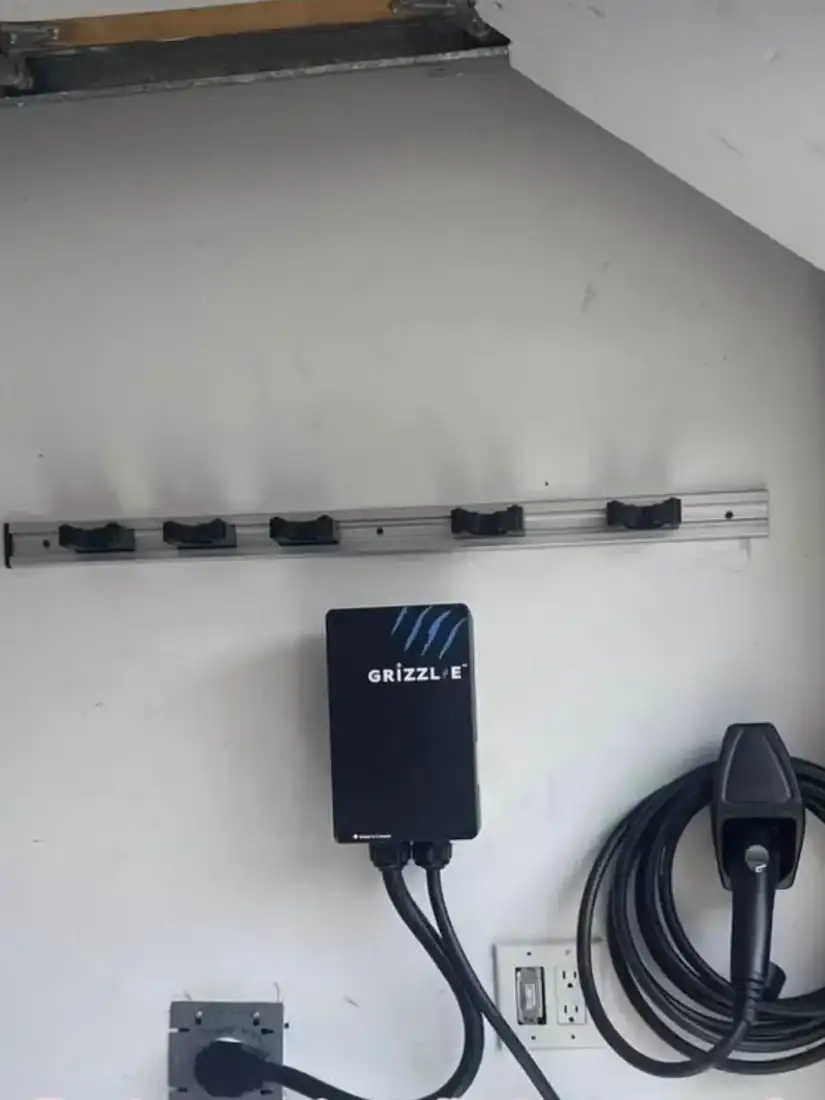
What a Level 2 install includes
A Level 2 charger runs on 240 volts and usually charges a car overnight from close to empty. Most chargers sold in Ontario draw 32 A or 48 A, which means a 40 A or 60 A circuit of its own.
The job is four pieces: a load calculation on the panel you have, a new breaker and cable run to where you park, mounting and connecting the charger, and the ESA notification and inspection.
- Hardwired or plug-in. We install hardwired chargers and 240 V receptacles for plug-in units; hardwired is the cleaner choice outdoors.
- Charger supplied by you or by us. If you already bought one, send the model so we can size the circuit before the visit.
- Load management when the panel is close to full, so a service upgrade is not the default answer.
Before you buy a charger
Check your car’s onboard charger rating. A 48 A charger on a car that only accepts 32 A charges no faster, and the bigger circuit costs more to install.
How the visit runs
Most North York house installs are finished in a single day once the panel has room.
Panel and route check
We look at the panel, the service size and the path from the panel to the parking spot.
Load calculation
The calculation in the Ontario Electrical Safety Code tells us whether a 40 A or 60 A circuit fits, or whether load management is needed.
ESA notification
The work is filed with the Electrical Safety Authority before it starts.
Circuit and charger
Breaker, cable run, mounting and connection, then a test charge with your car if it is home.
Inspection
ESA inspects the installation and the record stays with the house.
Willowdale houses and Yonge Street condos
Many of the 1950s bungalows around Willowdale, Lansing and Newtonbrook still have their original 100 A service, often with a basement panel on the opposite side of the house from the driveway. The cable run, not the charger, is usually the bigger part of the job there.
The newer custom homes that replaced them usually have 200 A and room in the panel, so the work is mostly mounting and the run to the garage.
Condo parking along Yonge between Sheppard and Finch is a different job. The charger connects to the building’s electrical system, so the condo board and its engineer set the conditions: where power comes from, how usage is metered and who signs off. Bring us the building’s requirements and we quote to them.
What changes the price
- Distance from the panel to the parking spot, and whether the run is through a finished basement or exposed.
- Whether the panel has space and capacity, or needs load management or a panel or service upgrade.
- Garage or exterior wall mounting, and whether a trench or conduit is needed to reach a detached garage.
- Condo requirements, including metering and the building’s approval process.
EV charger questions
Do I need a panel upgrade for an EV charger?
Not always. If the load calculation leaves room for a 40 A circuit, the charger goes on the existing panel. When it does not, a load management device can share capacity with other large loads before a service upgrade is considered.
Can the charger go outside in the driveway?
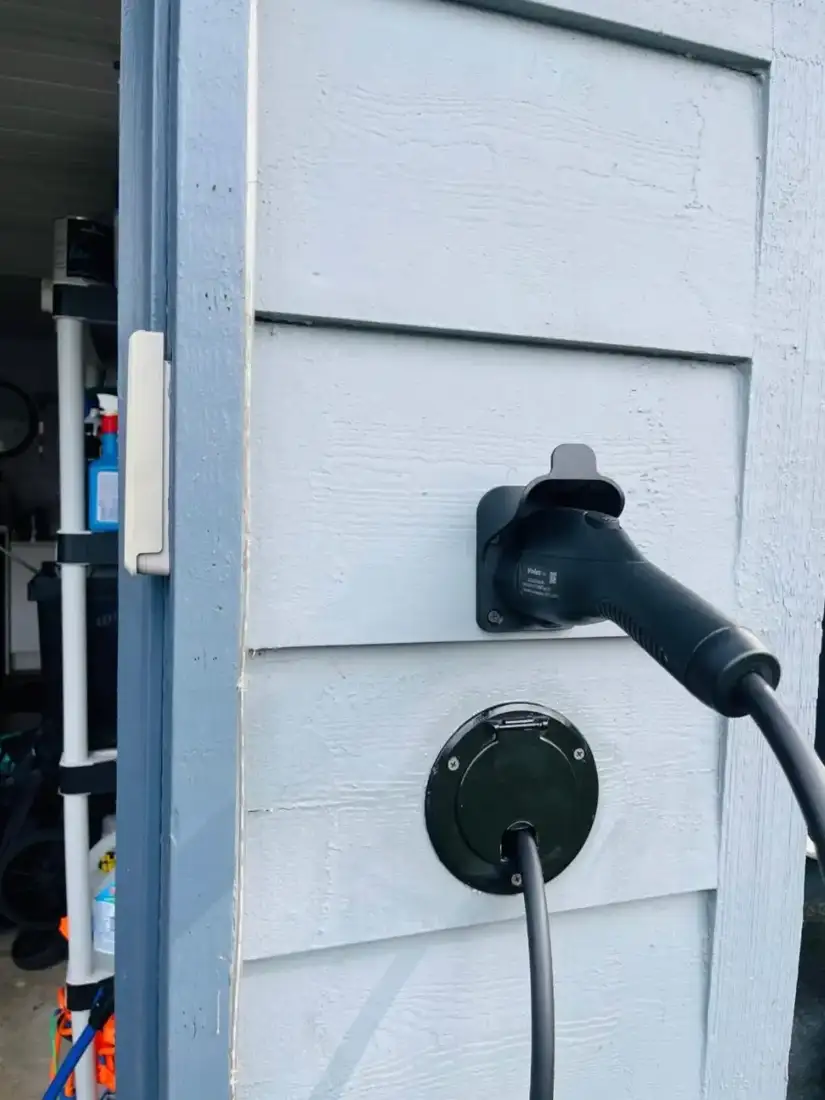
Yes. Outdoor-rated chargers mount on an exterior wall or post, with the cable run sealed where it passes through the wall.
How long does a house install take?
Usually most of a day once the panel has room. Upgrades or long runs through finished space take longer.
Is an inspection required?
Yes. The work is filed with the Electrical Safety Authority and inspected.
Planning an EV charger?
Tell us the car, the charger if you have one, and where you park. A photo of the panel with the door open helps us size the circuit before the visit.